
Tag Archives: greenhouse

Guide to Greenhouse Tomatoes

We’re seeing more and more gardeners and backyard farmers using hoop houses, high tunnels, and greenhouses for tomato production. They’re a great option for getting an extra-early harvest of tomatoes and other heat-loving crops. However, they also come with their own set of disadvantages, especially here in the hot, humid Southeast. For a great harvest of greenhouse tomatoes, consider these varieties and growing tips.Greenhouse Tomatoes Table

Best Varieties

You can grow any tomato in a hoop house, but some will perform better than others. An enclosed greenhouse or hoop house offers different climatic and pest conditions than out in the field. Here are some of our favorite greenhouse tomato varieties.

V, F, and N at the end of a variety name indicate known resistance to verticillium wilt, fusarium wilt, and nematodes, respectively. Check out our full Key to Tomato Disease Tolerance for other abbreviations.

Ventilate Your Greenhouse

High humidity allows fungal diseases to thrive. As the summer gets hot and humid, you need to ventilate your hoop house or greenhouse well to avoid disease. Where possible, roll up the hoop house sides. Use exhaust fans to regulate heat and humidity. Most fan options come with a thermostat that will open the shutter and turn the fan on automatically based on temperature.

Consider Growing Multiple Successions of Greenhouse Tomatoes

Many gardeners don’t consider tomatoes succession crops because healthy, indeterminate plants can produce until frost. Unfortunately, in hot, humid climates like the Southeast, tomatoes often succumb to diseases like blight before frost kills them. Even in other areas, the plant’s productivity may slow over time.

Sowing multiple successions of tomatoes can help ensure you have productive tomatoes throughout the season, whether you want them for fresh eating, the market, or canning.

Additionally, planting multiple successions allows you to grow different types of tomatoes. For example, you can plant Glacier early, followed by a succession of Atkinson. Glacier produces in just 58 days and is extra cold tolerant, while Atkinson, bred by the University of Alabama, excels in hot, humid conditions.A hoop house with tomatoes

Trellis and Prune Your Greenhouse Tomatoes

Tomatoes are large, vining plants. To make the most of your greenhouse or hoop house space, trellis and train the vines vertically.

Most commercial growers use a vertical string system. Many of these systems use twine that’s suspended on a roller or pulley so that you slowly lower the twine as the plant matures, allowing the pruned bottom of the tomato vine to rest on the ground while the tip continues to grow. Growers often refer to this as the lower and lean method.

However, in smaller hoop houses or makeshift greenhouses, you can trellis plants with traditional field methods like the Florida weave, stakes, or fencing panels.

Training vines on a trellis will be much easier if you prune the tomatoes. Pruning also allows for additional air circulation, and when done correctly, can improve yields by encouraging flowering and fruit set. However, you still need plenty of foliage to maintain the plant’s growth. Check out our pruning guide for full instructions.

Irrigation

Tomatoes need consistent moisture, and hot greenhouses can dry out quickly. Water your tomatoes deeply on a regular schedule, allowing the soil to slightly dry between waterings. Consider installing drip irrigation or soaker hoses in your greenhouse to minimize your watering efforts. You can also hand-water small greenhouses and hoop houses with a hose and nozzle. Water the base of the plant and avoid splashing water onto the leaves.Tomato flowers

Pollination

Pollination is necessary for tomatoes to set fruit. If you have a hoop house where you can open the doors and roll up the sides, you may have no problem with pollination. However, in a closed greenhouse or hoop house system, bees and other pollinators won’t have access to your tomato flowers. If you can’t let pollinators in, you’ll need to do the work yourself by using a small paintbrush or Q-Tip to transfer pollen between flowers.

Fresh Greens to Harvest from Fall through Winter

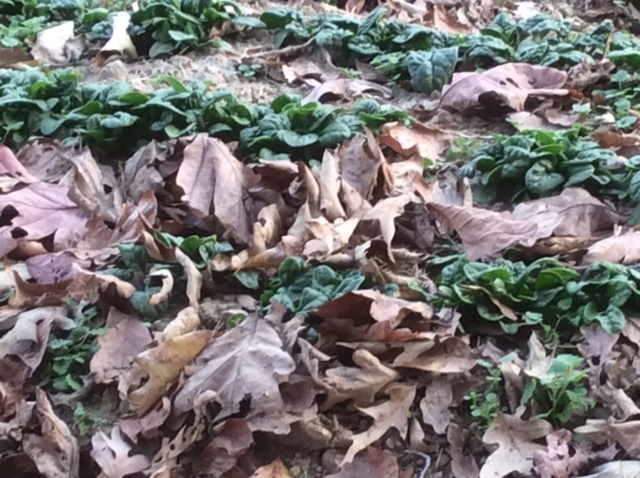
Spinach with Leaf Mulch

By Ira Wallace

Fall and winter offer a second chance to grow all the delicious greens and wonderful roots we savor in spring. They’re even easier to grow, thanks to decreasing weed pressure and reduced need to water. Many winter greens, like kale, collards, and spinach, even taste sweeter in fall as they concentrate sugars to withstand colder temperatures.

Our garden is brimming with greens ready for harvest now, as well as younger plants that we won’t harvest until early spring when they will grow rapidly as the days begin to lengthen.

Elliot Coleman coined the term “Persephone Days” for the period when there is less than 10 hours a day of sunlight and plant growth slows to a halt. Typically November 21st through January  21st, or a little longer due of outside ground temperatures. So what you see in the garden now is what you get until early February for practical purposes, unless you are growing under cover in a greenhouse, cold frame or low tunnel.

With an extended drought and weeks of record breaking highs, 2016 was a really tough year for establishing our fall crops. In many cases we had to do a third succession planting to get the beds full of thriving plants. In the case of spinach and kale, our last and most successful sowing was in early October. For an idea of what and when we sow most years read our blog post on Summer Sowing: Continuous Harvest All Summer into Fall or look at our Southern Exposure Fall and Winter Growing Guide.

So let’s take a look at some of what we have green and growing in the garden on “Black Friday Weekend 2016”:
vates collards
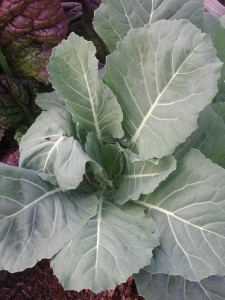
vates collards

Kale, collards, and spinach are our largest plantings for winter greens because of their versatility in the kitchen and dependable winter hardiness. Because our earliest succession plantings had spotty germination we have a lot more plants from the later sowings. Luckily for us the unusually warm temperatures continued into November so we have nice full beds of Abundant Bloomsdale spinach and Lacinato Rainbow kale going into December. Fortunately half grown ”juvenile” plants often survive the winter and last longer into the spring. In addition to the heat and drought our collards were also attacked by grasshoppers in August so the remaining plants are smaller than usual at this time. Heirloom collards are survivors so I expect they will do well and start vigorous growth again in early spring.
tatsoi rosette
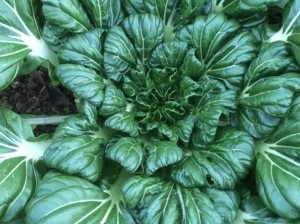
tatsoi rosette

We have already harvested many of our oriental greens for stir-frying and to make Kimchee, but our Tatsoi greens are still looking and tasting great. In winter we enjoy the shiny dark green leaves in salads, stir-frys and soups. One interesting thing with the spotty germination on some of our early sowings is how large the plants can get in fall and still be sweet and tender.
creasy greens
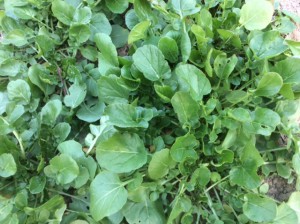
creasy greens

Another favorite green for us and many others in our region are Creasy Greens and their cousin from grower Frank Morton of Wild Garden Seeds in the Northwest, Belle Isle Cress. They are lightly spicy and crisp in winter. Take care as they will naturalize if left in the garden to produce seed.

Let’s not forget Arugula, another winter salad favorite.
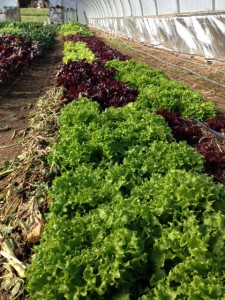
lettuce in the hoophouse at Twin Oaks

We also grow a lot of winter lettuce. I especially like red varieties for the deep color they develop in winter. Outredgeous and the Wild Garden Lettuce mix are favorites that have been joined by the heirloom Crawford, a Texas winter salad Lettuce.

We still have some winter roots in the ground: carrots, beets, salsify, parsnip and winter radishes. We have potatoes and sweet potatoes in storage.

Maybe we can look at what we still have canned, dried, fermented and frozen sometime soon. Until then enjoy your garden.