When most people think about planting heirlooms, they think of colorful, quirky tomatoes and other vegetables. Of course, we love heirloom veggies, but there’s a lot to love about heirloom flowers too! Growing them helps support pollinators, wildlife, and beneficial insects. It also preserves biological diversity. Here are ten easy-to-grow heirloom flowers that are perfect for beginners.
Poppies
Poppies are one of our favorite flowers to fall sow. These cool weather loving beauties can also be sown in early spring. They germinate best when soil temperatures are around 60°F and are quick to bring beauty to the garden.
Poppies are an excellent choice for gardeners trying to maximize their garden space. They provide incredible, early-season beauty and seed pods later in the season. The seed pods make lovely additions to dried arrangements and wreaths, and the seeds inside the pods are edible and perfect for baked goods and salad dressings.
Cosmos
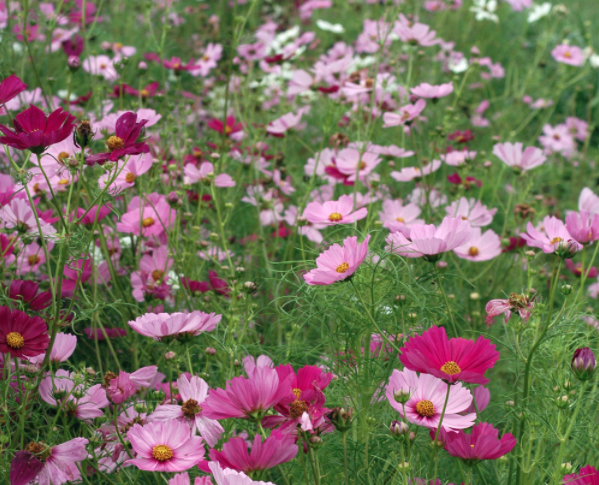
Cosmos are some of the least finicky annual flowers. They’ll tolerate poor soils, partial shade, and drought once established. Direct sow cosmos when the soil is about 70°F after all danger of frost has passed or start them indoors about 4 to 6 weeks before your last frost for earlier blooms.
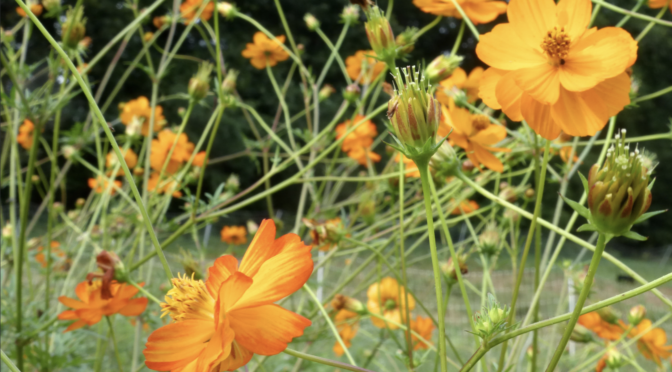
Some of our favorite heirloom cosmos include Mexican Cosmos, Sensation Mix Cosmos, and Mona’s Orange Cosmos (pictured above). They have a long bloom period, and deadheading encourages them to continue. They’ll also help to attract pollinators and birds, which eat the seeds, to your garden. The petals of Cosmos sulphureus are edible.
Zinnias
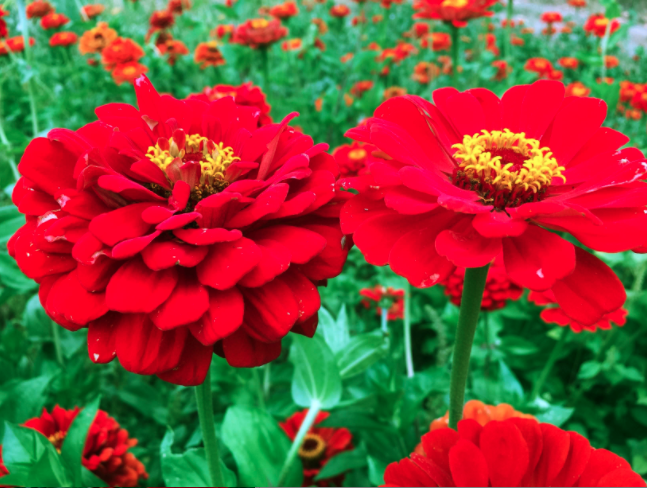
Zinnias are the queens of the cut flower garden. The great thing about zinnias is that the more you cut, the more they’ll keep blooming. If you’re not using them for cut flowers and just want to enjoy them in the garden, keep up with deadheading to prolong their bloom period.
We carry two heirloom zinnias Peruvian Red and Peruvian Yellow. They’re both easy to direct sown after your last frost. They can also be started indoors and transplanted out after your last frost date for earlier blooms.
Sunflowers
Don’t think of sunflowers as ordinary. There is so much variation in sunflower varieties. From the frosted looking Silverleaf Sunflower to the towering 7 to 9 foot stalks of the Seneca Sunflower to the brilliant blooms of Red Torch Tithonia there’s something for everyone.
Sunflowers are easy to grow, and a great choice for gardening with young children; their large seeds are easy to sow. Larger varieties also make excellent trellises for pole beans and other vining plants.
Hollyhocks
These tall spikes of flowers are biennial, meaning they bloom the second year. They can be started indoors or direct sown. Plant hollyhocks in areas that receive full sun. Check out our post Cottage Garden: Growing Hollyhocks for more instructions.
Especially in windy areas, hollyhocks may need staking to prevent lodging. You can also grow them along a fence and use twine or fabric to secure them as they mature. Hollyhocks will self-seed and if allowed to naturalize in a bed, can provide blooms every year.
Morning Glories
An old favorite, morning glories produce vigorous vines climbing up to 15 feet! Their trumpet-shaped flowers are excellent for attracting pollinators, and they look fantastic climbing fences and porch railings. They can be grown in the garden or in large containers.
Morning glories should be planted with a trellis where they’ll receive full sun. Soak seeds two days before planting, changing the water every 12 hours for best results. Then direct sow or transplant them after frost.
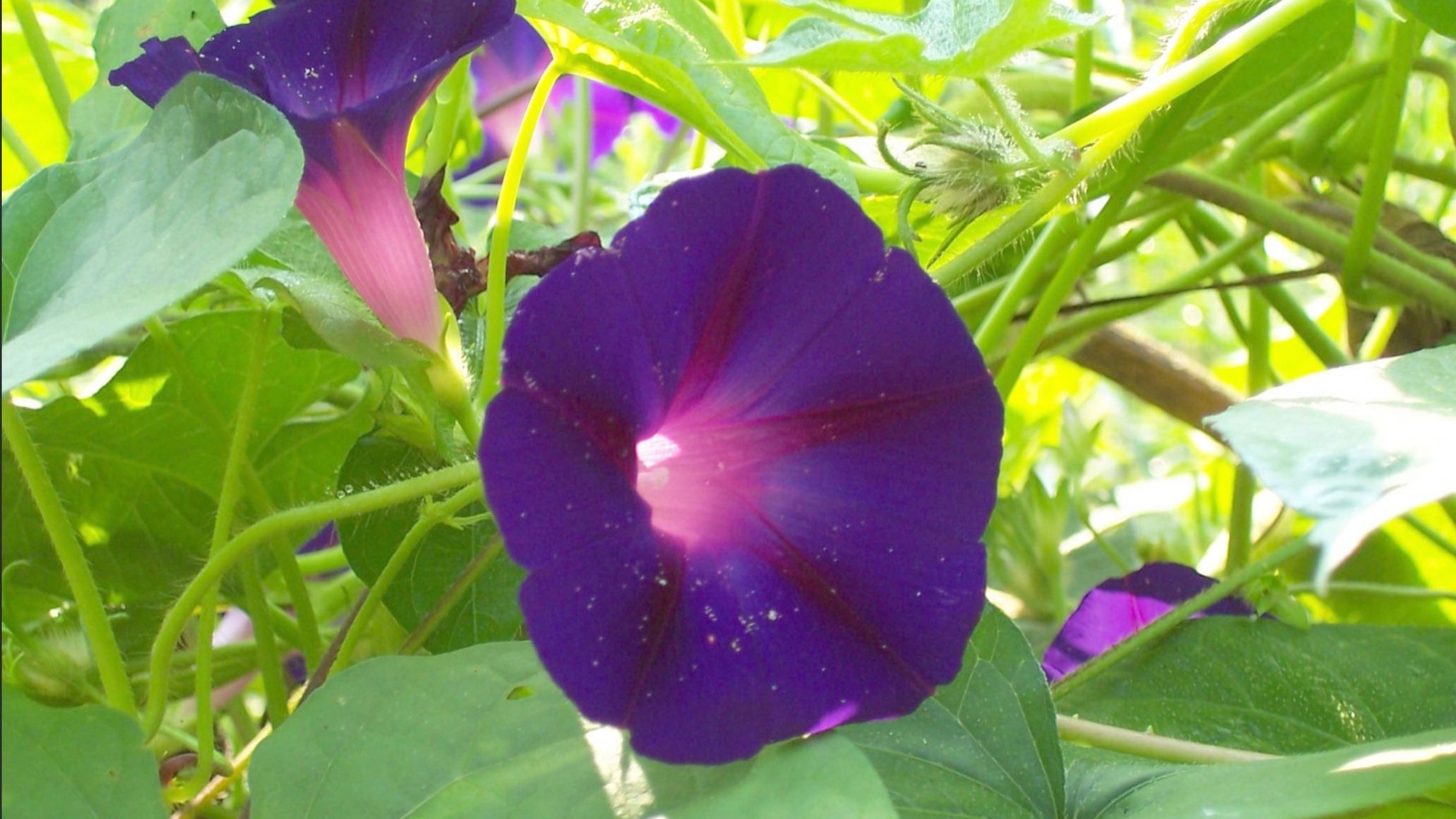
One of our favorite morning glories is Grandpa Ott’s Morning Glory (pictured above), a family heirloom from Diane Ott Whealy. This variety is one of the original varieties that started Seed Saver’s Exchange and the whole heirlooms movement.
Asters
While there are some perennial asters, the heirloom aster we carry, Crego Giant Mixed Colors, is a large annual. They grow up to 3 feet tall and make excellent cut flowers.
Asters can be easily direct sown or transplanted. They germinate best when the soil temperature reaches 70°F and should be planted after your last frost in a spot that receives full sun.
Love-Lies-Bleeding (Amaranth)
Crimson tassels up to 24 in. long “drip” from these showy plants. Love-Lies-Bleeding looks excellent in floral displays, whether fresh or dried.
This striking heirloom requires little care. Direct sow Love-Lies-Bleeding after the danger of frost has passed. It should be planted in full sun and is rather drought-resistant. Larger plants may benefit from staking for the best display.
Coreopsis
A native perennial, coreopsis is excellent for attracting pollinators and birds to your garden. It’s also a great natural dye and yields a broad range of colors.
Coreopsis is an annual plant, but it self-sows readily and will naturalize in meadow plantings. Direct sow or transplant out coreopsis after danger of frost has passed in full sun or partial shade.
Jewels of Opar (Fame Flower)
This purslane relative is easy to grow and has a multitude of uses! The mild, succulent leaves are great in salads and sandwiches or as a spinach substitute. Native to parts of the South and the Caribbean, it also has a history of medicinal use. The seed stalks are great additions to dried arrangements with seed pods that dry to shades of orange, red, brown, gold, and grey.
Transplant or direct sow Jewels of Opar after all danger of frost has passed. Self-sowing readily, Jewels of Opar may naturalize. It’s perennial in zones 8 and up.
Find out more about growing Jewels of Opar here.
Growing heirlooms helps preserve biodiversity and makes your garden unique! Plant a few of these ten easy-to-grow heirloom flowers this season.