
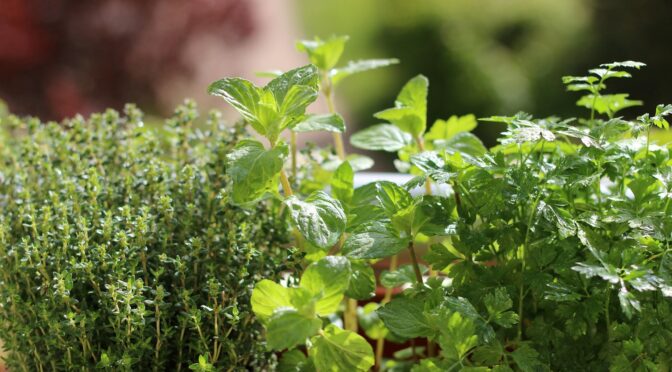
You don’t need to be an apartment gardener to enjoy container herbs! For home gardeners of all types, potted herbs offer quick access, portability, and are a great way to add beauty and functionality to porches and patios. They’re also a great option for commercial growers looking to expand their offerings at farmers’ markets or stands. Whether you’re a complete beginner or a seasoned expert, you can grow beautiful, flavorful herbs in containers.
Start Out with Easy to Grow, Popular Herbs
It’s always tempting to order all the unique varieties a seed catalog offers, but if you’re new to growing herbs in containers, we recommend getting the basics down first. Choosing easy to grow herbs will help ensure your first season is a success, and selecting varieties that are popular ensures that you or your customer will enjoy using them. Try herbs like basil, dill, parsley, chives, mint, or cilantro.
Plan Your Plantings
Another way you can ensure you actually use and enjoy your herbs is to plan your plantings. Are you growing a large batch of cucumbers, or do you plan to purchase some at the farmer’s market for pickling? Add plenty of dill to your container herb garden to give those pickles a kick of flavor. Basil is always a favorite when we’re harvesting eggplants, tomatoes, and peppers. Chives are wonderful with spring salads and early potatoes. You get the idea. Having a plan for using your herbs will make your herb garden much more enjoyable.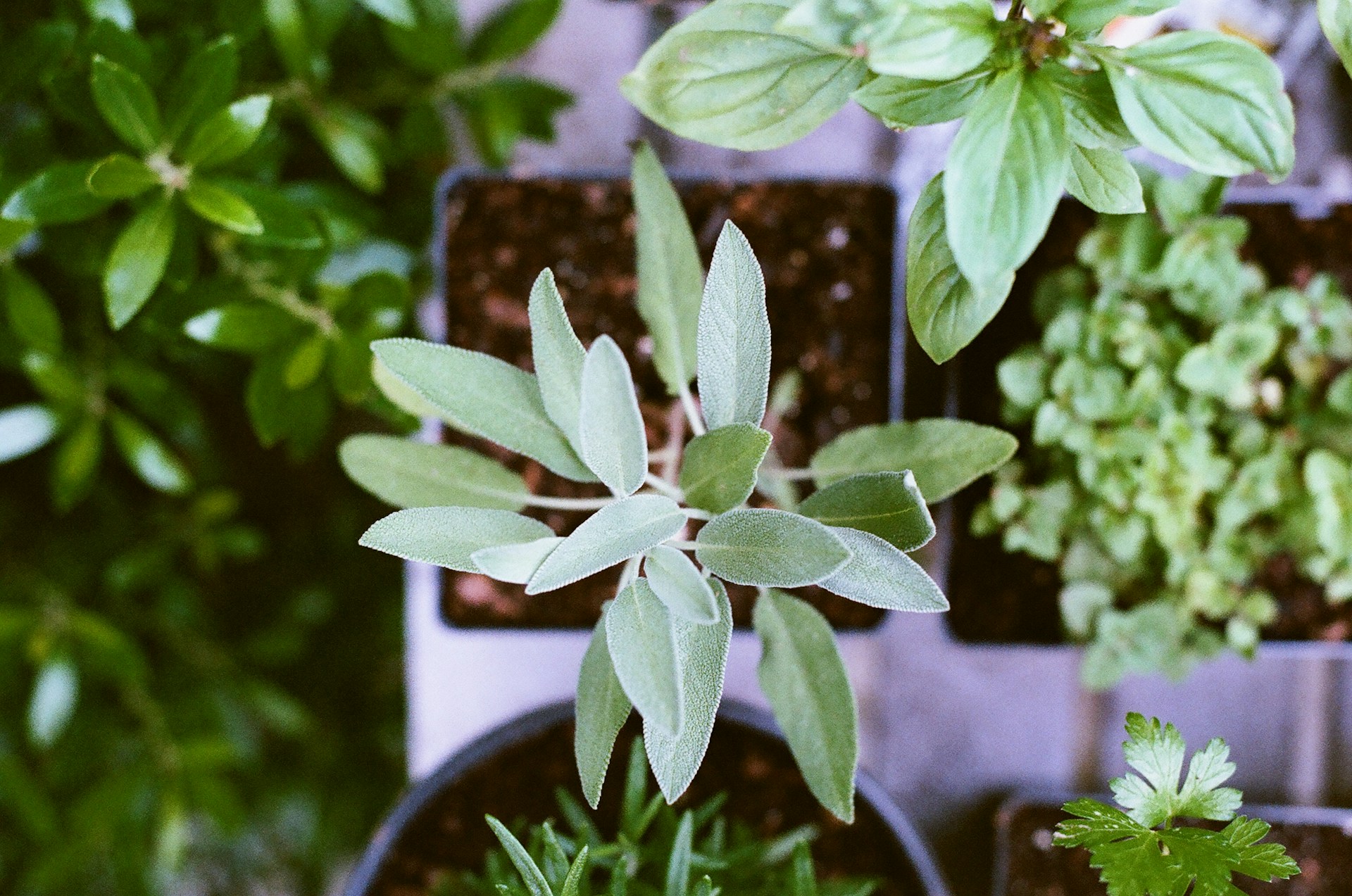
Select Appropriately Sized Containers
For commercial growers, small pots about 4 inches in diameter are often ideal for selling herb starts. However, home gardeners growing herbs over the season should use much larger pots, like those that are 12 inches or greater in diameter. Home gardeners can also use large planters, stock tanks, or other upcycled containers to create mixed plantings.
No matter what type of container you use, whether it’s plastic, metal, or terracotta, select something with good drainage or make drainage holes yourself. If the holes are large, and you’re worried about losing soil while watering, you can place burlap over the bottom of the container.
Follow Growing Recommendations
Growing recommendations are essential with herbs. For example, sage takes weeks to germinate, echinacea requires cold stratification, and cilantro is tough to start in hot weather. Reading growing instructions carefully can save you a lot of time and disappointment.
Select Good Soil and Amendments for Your Container Herbs
Whether you’re growing in a traditional garden or containers, a good harvest begins with good soil. Purchasing high-quality potting soil will make an enormous difference in how fast your herbs grow and how well they perform.
That said, no potting soil will provide all of your plant’s nutritional needs over an entire season. Mixing finished compost into your potting soil in a ratio of 1/3 compost to 2/3 potting soil is a great way to provide additional nutrients.
You can also fertilize during the season, especially if plants exhibit symptoms of a deficiency, like yellowing leaves. Liquid fertilizers, like fish emulsion or liquid kelp, are easy to use. You can also use a balanced, slow-release granular fertilizer.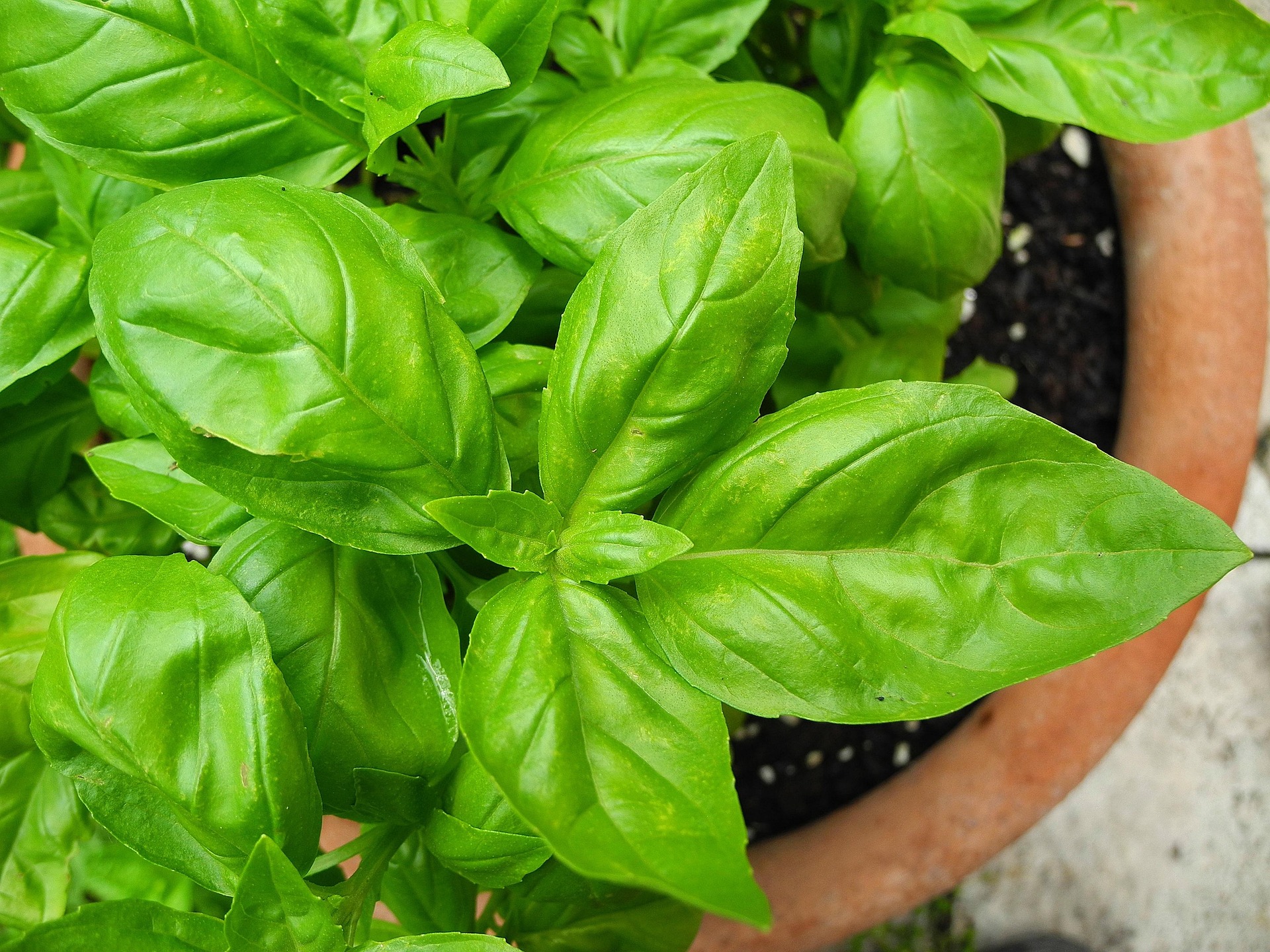
Select a Sunny Spot
Most herbs require at least 6 to 8 hours of sunlight per day to thrive. Find a sunny spot whether you need to place containers along your driveway, set up a window box, or create a container garden on your patio.
Keep Up with Harvesting and Pruning Your Herbs
Most herbs benefit from regular pruning or harvesting. Trimming branches prevents plants from getting tall and woody and encourages a bushy growth habit. Once trim about 1/3 of a well-established plant at one time. Use your fingers or small shears for woody herbs to clip branches just above a leaf node to prevent branching.
Read more about pinching herbs for better production.
Water Consistently
Many herbs like sage, rosemary, and oregano are drought-tolerant once established, but even by their standards, containers can dry out quickly. Check your containers frequently especially in hot, dry weather.
Our Favorite Container Varieties
While you can grow nearly any in a variety, some are better suited to container life. These varieties may be bush-type, disease-resistant, quick-growing, or slow to bolt.