
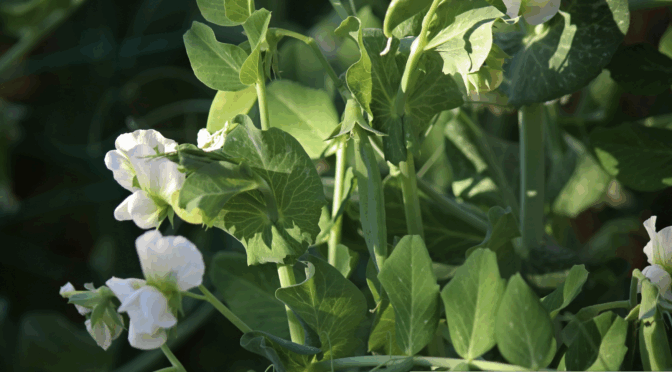
Peas are a sweet, cool-weather treat from the garden. They’re often listed as easy to grow, but in the Southeast, where the weather is often hot, they can be tricky. If you’re new to gardening, or have struggled to get a good pea harvest, here’s everything you need to know to select peas, grow and care for them, and have a successful harvest.
What are the Different Kinds of Peas?
There are a few different types of peas. For this article, we’re focusing on cool-weather edible peas that are cultivars of the Pisa sativum species. These include snow peas, snap peas, English or shelling peas.
Snow Peas
Snow peas have thin, tender shells and are ready for harvest when the pod is large and flat with tiny immature seeds. Typically, folks enjoy them whole, often in Asian dishes.
Snap Peas
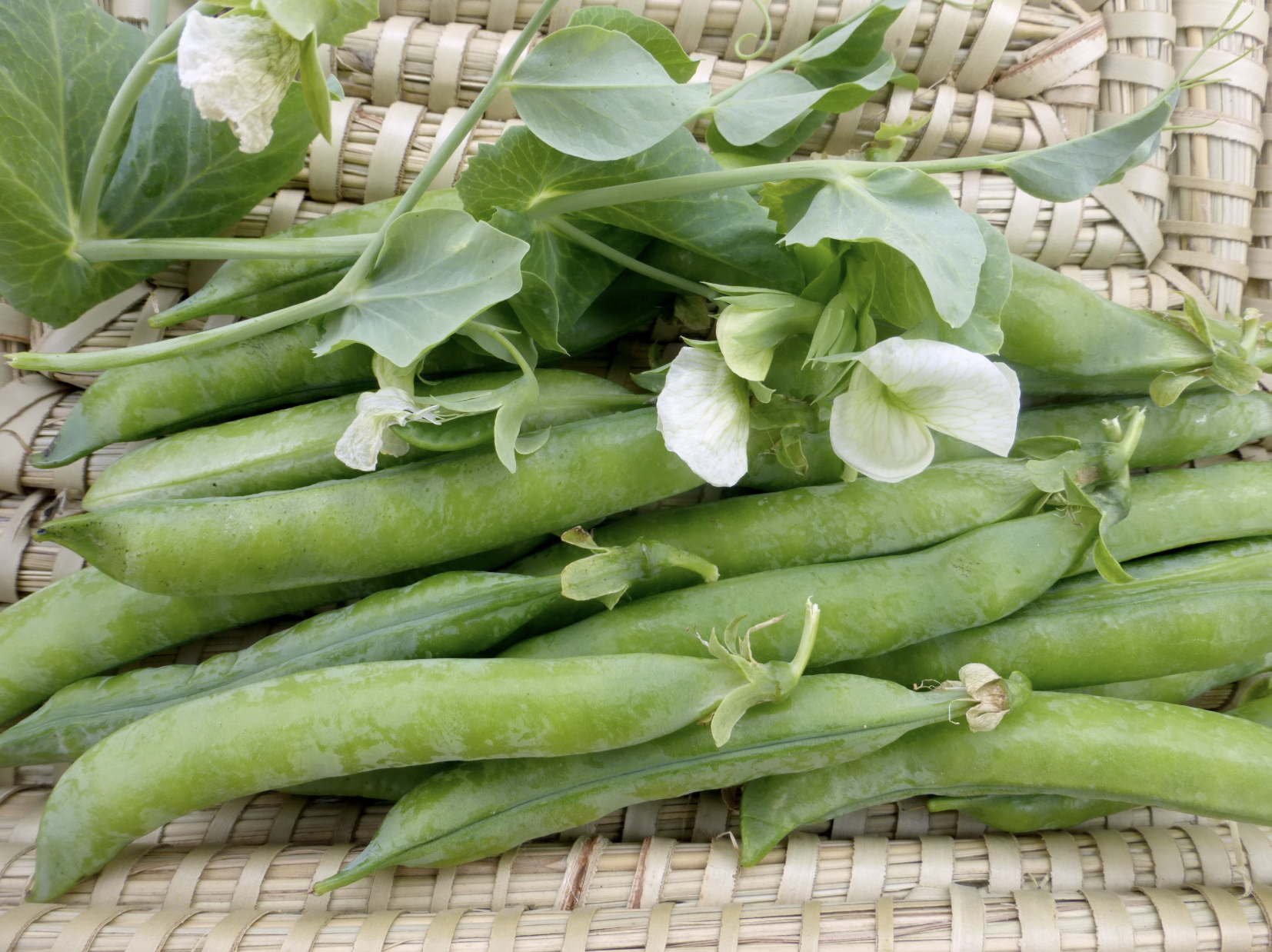
Similarly, snap peas have tender shells and are usually eaten whole. Unlike snow peas, snap peas are harvested when they’re plump and full. Both the peas and the shell are crisp, tender and sweet. They’re great for eating raw or in stir-fries and other dishes.
Shelling Peas
Shelling or English peas have plump, sweet peas but tough, inedible pods.
A Note on Other Types of Peas
You may also find a few other peas listed on our website, including sweet peas, Austrian winter peas, and cowpeas.
Austrian Winter Peas
Austrian winter peas are also a cultivar of the Pisa sativum species. Like the other peas mentioned above, they’re edible. Austrian winter peas aren’t particularly productive for making pods, but the shoots and tendrils that make tasty salads. In much of the southeast, these peas will overwinter. They’re an excellent winter cover crop or salad green.
Sweet Peas
Sweet peas are from a different species, Lathyrus odoratus. They vine like other peas and offer stunning, beautifully-scented, early flowers. However, sweet peas are toxic. Never consume sweet peas.
Southern Peas (Cowpeas, Field Peas)
Southern peas are also called cowpeas, field peas, crowder peas, and black-eyed peas. They’re cultivars of the Vigna unguiculata species. Whatever you call them; they’re an old southern favorite thanks to their incredible production in hot climates. Unlike the peas we’re focused on, southern peas don’t thrive in spring’s cool temperatures.
Preparing a Bed
Peas thrive in soil with a pH between 6.0 to 6.8. For production, you want well-drained soil that’s rich in phosphorus and potassium. Peas are sensitive to excess nitrogen. Heavy nitrogen in peas will cause them to put on excessive foliar growth at the expense of pod production. Thankfully, they make some of their own and, like other legumes, are considered “nitrogen fixers.”
When to Grow Peas
Young pea seedlings are quite tolerant of frost and cold weather. Direct sow peas as soon as your soil can be worked in the spring. They germinate well when soil temperatures are above 40°F.
Snap pea seeds are high in sugar, so they may rot before germinating when the soil is cold. To avoid this, we recommend pre-sprouting snap pea seeds for early-season plantings in cold soil.
You can also fall sow peas, but this can be trickier. Especially here in the Mid-Atlantic, we find that by the time it cools down enough to sow peas, it’s too late for much production. We get killing freezes before most peas will mature. Unlike the young plants, the pods are susceptible to freezing.
Sowing & Growing Peas
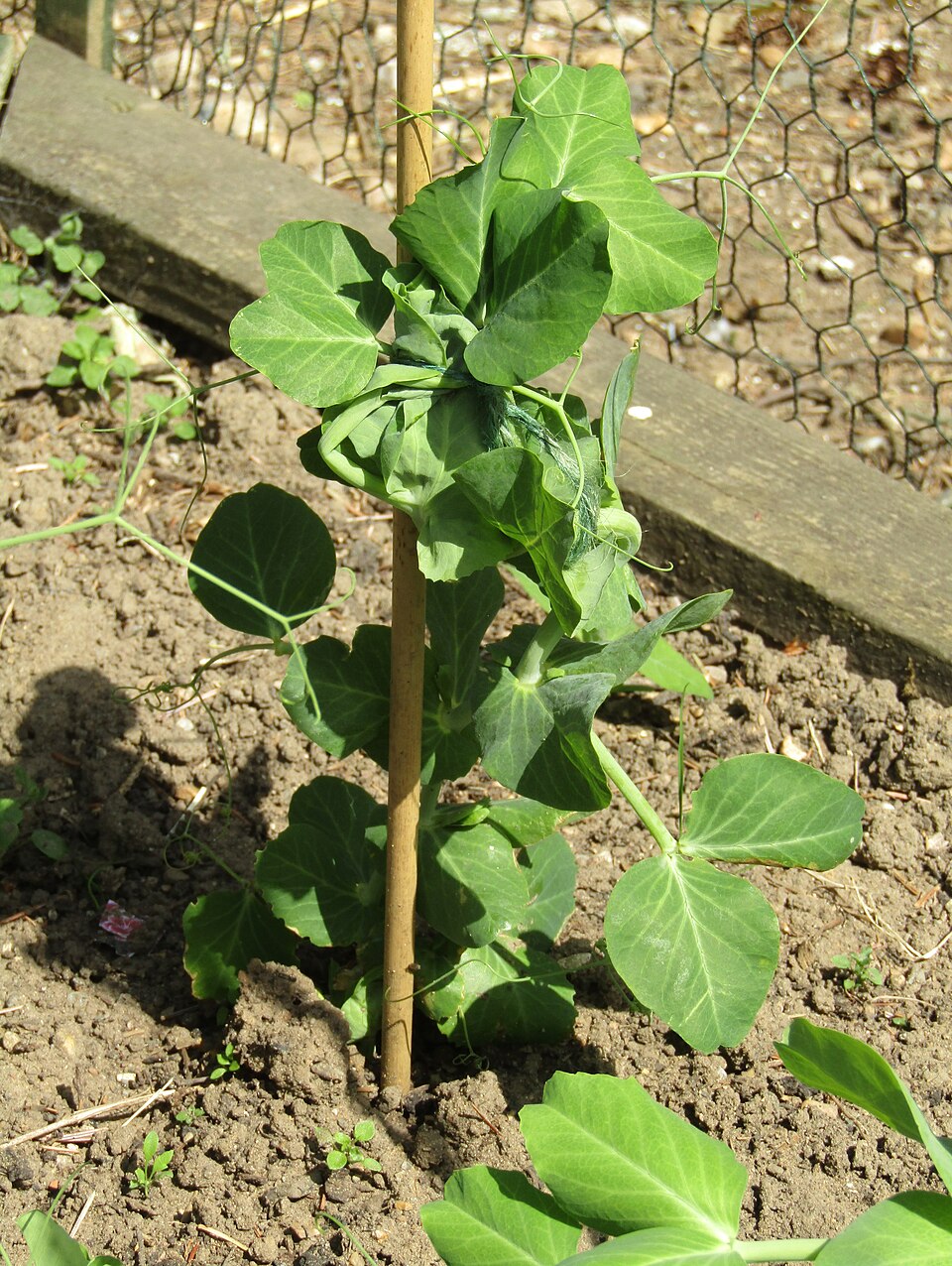
Peas benefit from some type of support, particularly the tall varieties. Use fencing, netting, stakes, or well-branched brush driven into the ground to create a trellis.
Sow seed 1 inch deep, 1/2-1 inches apart in double rows 4 inches apart. Thin to 2 inches apart. Plant single or double rows 2 feet apart for dwarf varieties and 2-1/2 to 3 feet apart for tall varieties.
Typically, the soil is wet enough in spring that water isn’t an issue. However, if the soil is dry in spring or you’re fall planting, keep the soil consistently moist.
Peas benefit from keeping up with the weeds. However, they have shallow roots, so you should avoid cultivating near the base of the plants.
Pea Diseases
Peas are susceptible to a couple of diseases, including pea root rot (Fusarium sp. or Aphanomyces euteiches), which will cause yellowing and leaf die-back starting near the base. They are also susceptible to powdery mildew, which will cause white mold-like spots on the leaves, stems, and pods, particularly in hot weather. If disease is a problem, use resistant varieties and follow a 5-year rotation.
Harvesting Peas
Peas produce more when you harvest regularly. In the height of the season, you may need to check every or every other day. Harvest the pods as soon as they reach maturity. Allowing them to over-ripen can signal the plant to stop producing.
Peas harvested in the cool morning will be crisper. The sugar in peas converts to starch soon after harvest, so to keep the sweet flavor, use or process within two hours.
Saving Pea Seed
It’s super easy to save seed from open-pollinated pea varieties! Let the pods mature on the vine until they are brown and dry. You can shell your seeds by hand, or thresh and winnow them.
Placing the whole, dry vines into a pillowcase and beating it against the ground works well to dislodge the seeds. Then you can use a couple of buckets and a box fan to winnow out unwanted plant material. Pour a bucket of material into another bucket sitting in front of the running fan. The heavy seeds will drop into the bucket while the light plant material will blow away. Repeat as needed. Store seeds properly to ensure they last for several years.
If you’re growing multiple pea varieties, remember that they can cross. Isolate varieties by a minimum of 50 feet for home use. For pure seed isolate by 150 feet.