
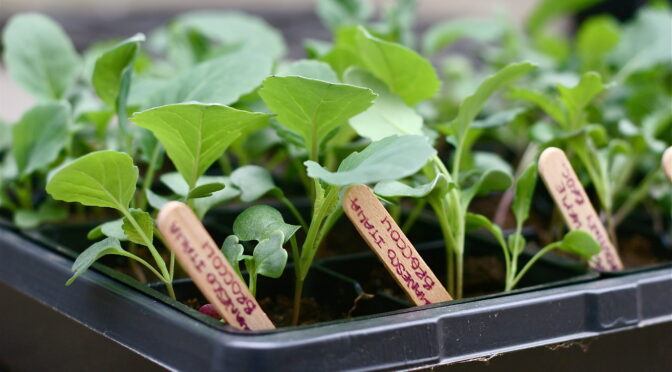
Starting your own seedlings can be a great way to improve your garden. It gives you access to a wider range of varieties and helps you save a bit of money. It can also help ensure that you start the season with healthy plants, as long as you avoid a few common mistakes. Here are some of the common issues with seedlings we see and how to avoid them.
Leggy or spindly seedlings
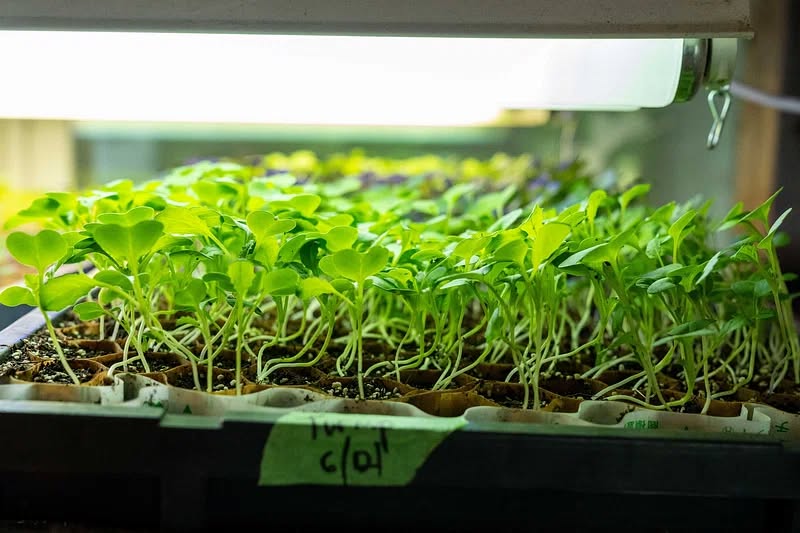
Seedlings that grow tall or “leggy” with long, spindly stems are a clear sign your plants aren’t getting enough light. Your plants are literally reaching for the sun.
Plants have evolved to grow quickly towards the sun until their leaves are receiving adequate levels of light. In the wild, this helps newly germinated plants clear the soil, plant debris, and the leaves of other plants until they reach a level where they will receive adequate sunlight.
While this adaptation serves them well in the wild, it also means that if your vegetable crops don’t get enough light, they will develop long, weak stems. To prevent this, use supplement lights like grow lights or LED shop lights and keep them about 2 to 4 inches above the tops of your plants.
Burned leaves with brown or white spots
While tall, skinny seedlings mean your seedlings aren’t getting enough light, it’s also possible for them to get too much light. Leaving high-intensity or hot lights too close to your seedlings can burn the leaves, resulting in brown edges, brown tips, brown or white spots on the leaves, or a combination of these symptoms.
Seedlings may also burn while you try to transition them outdoors. True sunlight is much harsher than any grow lights or indoor lighting. To avoid burning your seedlings, you need to slowly acclimate them in a process called hardening off.
Visit our blog How to Harden Off Seedlings to learn more.
Dampening off
Another common issue is “dampening off,” which is when your seedlings develop a soft, discolored stem near the soil line and suddenly fall over and die. Fungi and molds that thrive in damp, cool conditions cause this disease.
Unfortunately, these molds and fungi will spread and may survive in soil and on equipment like pots, tools, and trays. If you spot dampening off in your seedlings, remove that tray from the others and carefully monitor the others. To clean your tools, trays, and equipment, soak them in a solution of water and 10% household bleach for 30 minutes.
There are also several ways to prevent dampening off:
- Select containers with drainage holes or use soil blocks.
- Use seed starting mix or potting soil that drains well.
- Avoid overwatering.
- Provide 12 to 16 hours of supplemental light for seedlings.
- If possible, use heating pads to maintain a soil temperature of 70-75°F.
- Use a low fan so improve air circulation.
Stunted plants with discolored purple, yellow, or discolored leaves
If your seedlings are growing particularly slowly and appear stunted with leaf discoloration, they may have a nutrient deficiency. Different deficiencies present with different symptoms.
Seed starting mix rarely contains high levels of nutrients, as it’s just designed to get plants started. Older seedlings may need to be fertilized and potted up. However, seedlings may often present with nutrient deficiencies when the soil is perfectly adequate. Conditions like waterlogged soil, dry soil, or cold temperatures prevent the plants from taking up nutrients.
Nitrogen deficiency
Nitrogen deficiency causes seedlings to turn yellow, beginning with the older, lower leaves before spreading to the younger leaves. Seedlings will also put on poor growth and may develop thin, spindly stems.
Cool soil, below 60°F, can affect your seedlings’ ability to take up nitrogen. 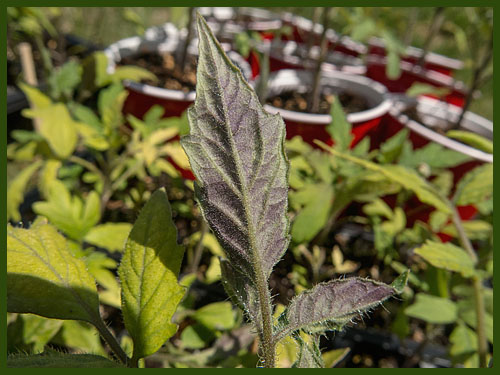
Phosphorus deficiency
Seedlings with phosphorus deficiency may have a purple appearance, particularly on the undersides of the leaves.
Even if there is plenty of phosphorus available, seedlings can present with phosphorus deficiency if they’re too cold or wet. Soil temperatures below 60°F or waterlogged soil can prevent seedlings from taking up phosphorus, even if plenty is available.
Potassium deficiency
Potassium deficiency can cause stunted growth, leading to stocky seedlings with weak stems. The older leaves often feature yellowing or purple-red coloration with browning or burned edges.
Seedlings may fail to take up adequate levels of potassium in waterlogged or cool soil below 60°F.
Visit our blog on Common Nutrient Deficiencies to learn more about identifying other deficiencies.
Correcting nutrient deficiencies
To correct nutrient deficiencies, ensure that your seedlings are at an adequate temperature and receiving an appropriate amount of water. If those needs are met, you can supplement them with a liquid fertilizer like liquid kelp or fish emulsion. Typically, you dilute these fertilizers in your watering can. Check the specific product instructions before applying.
Starting your own seedlings is an easy and fun way to start the season, but there are a few common snags growers run into. Avoiding these common seedling mistakes will ensure you start the season with healthy, vigorous transplants.
Having trouble with seeds germinating slowly? Check out our Five Quick Tips for Good Germination.