
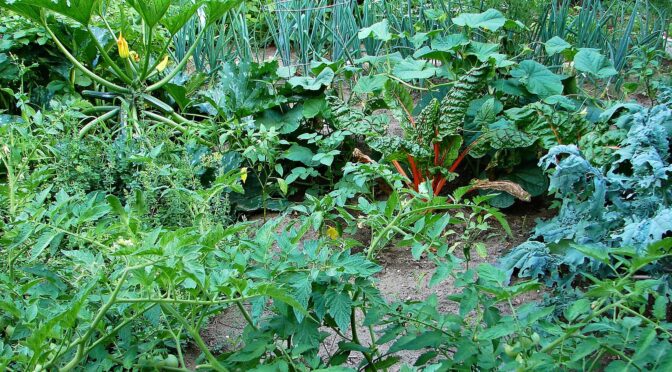
Small gardens don’t have to mean small harvests! It can be tempting to make your garden as large as possible and buy all of the seeds, but it’s easy to stretch ourselves too thin. It’s easy to get overwhelmed with all the weeding, watering, harvesting, and preserving for a large garden. A well-tended small garden will out-produce a large, poorly maintained garden. So whether you are short on space or short on time, there are still methods you can use to produce a big harvest.
Here are some good options for small garden layouts and a few tips for making the most of your space.
Small Garden Layouts
All small gardens are different, and there are no concrete rules. To create a layout that works for you, you’ll need to consider your space, your family’s tastes, and what vegetables perform best in your climate.
For these layouts, I’ve focused on some of our most popular vegetable crops like peppers, tomatoes, cucumbers, pole beans, carrots, sweet corn, lettuce, and summer squash. However, you can swap these out for other crops like okra, beets, asparagus beans, sage, peanuts, or sweet potatoes.
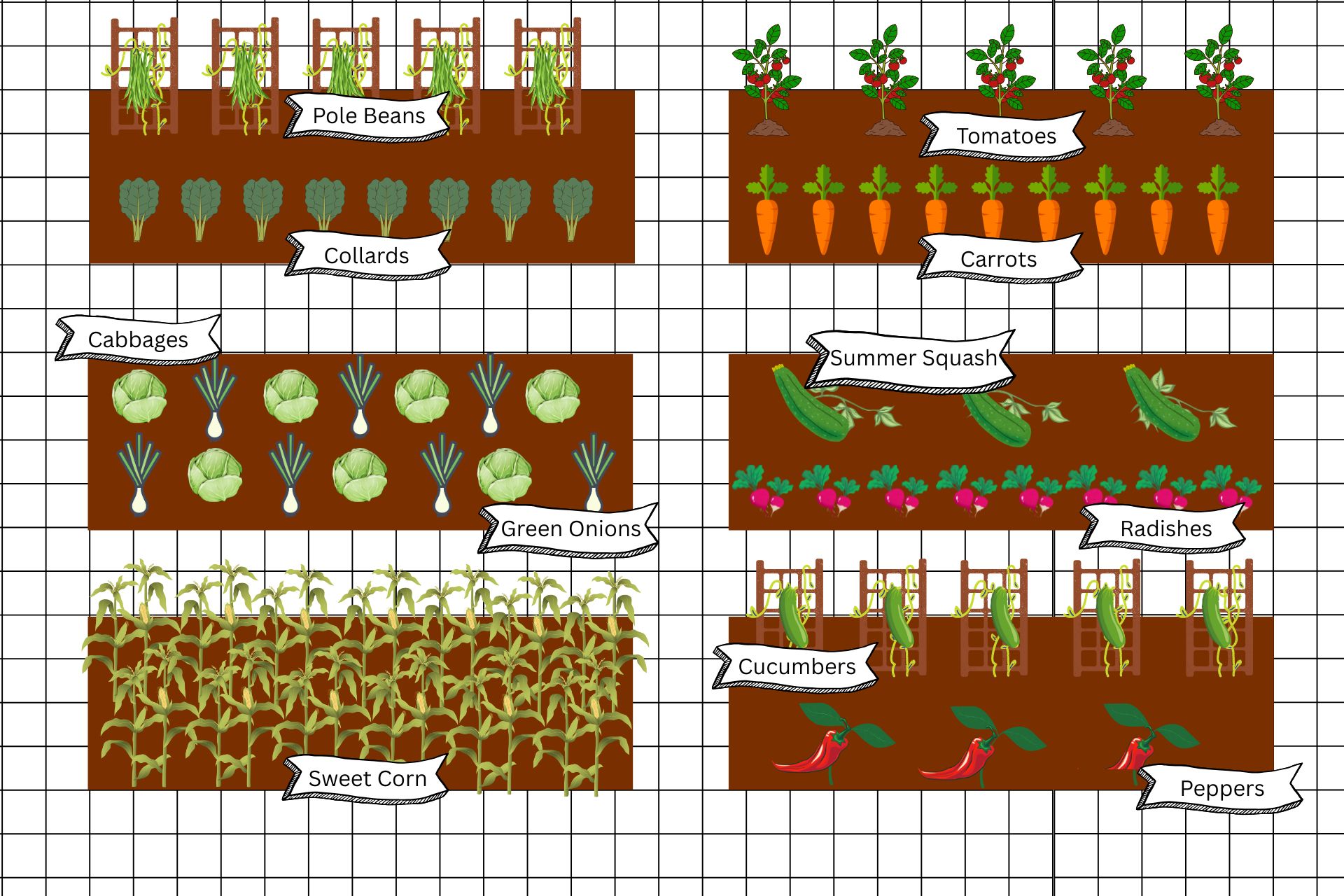
You can get incredible production from six raised beds (four feet by twelve feet). This layout features an early-summer option. The collards may have already replaced a cool-season crop like lettuce, and the sweet corn could have been planted where snow peas were previously grown.
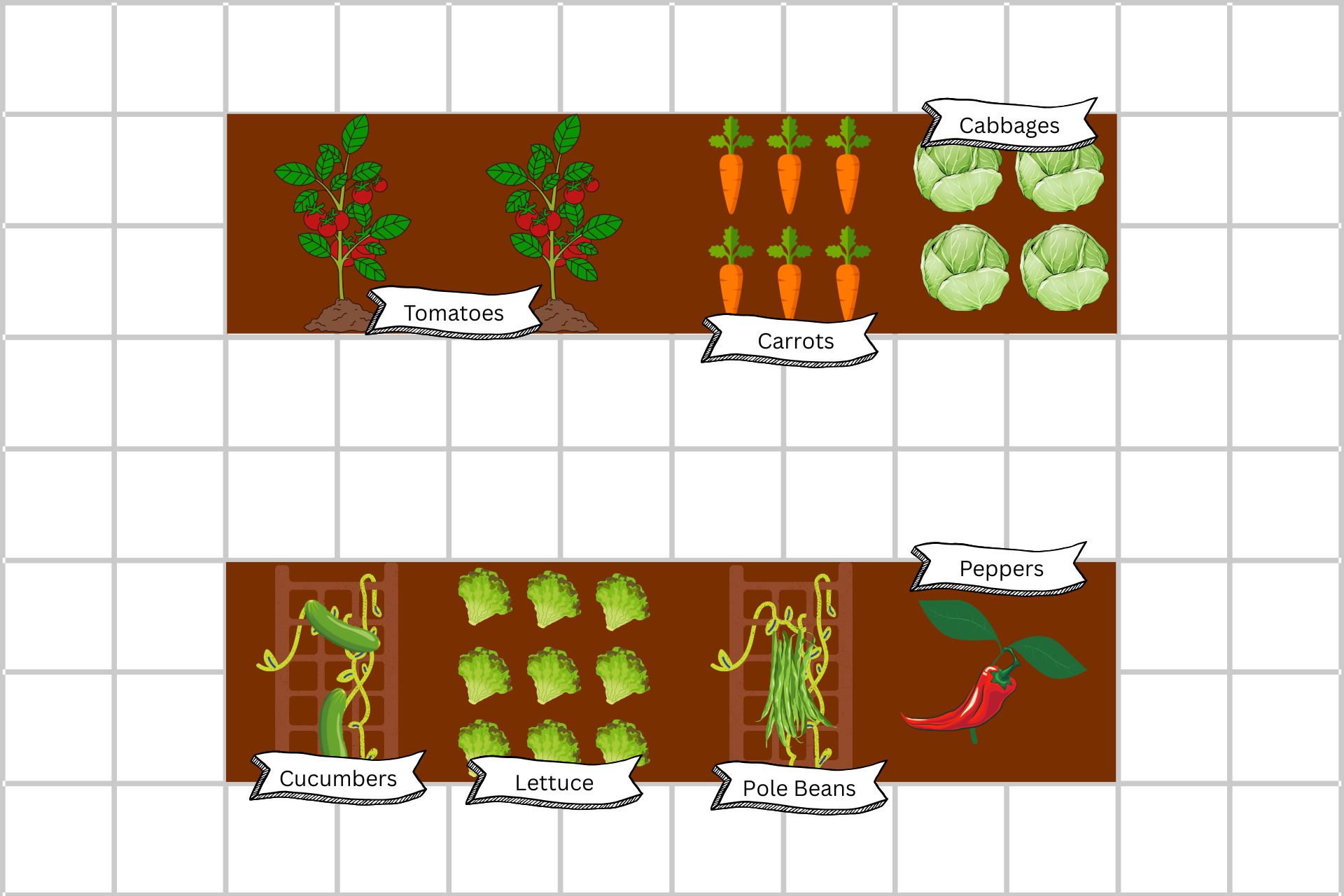
A couple of smaller raised beds (two feet by eight feet) can still provide an abundance. Focus on your favorites for a garden like this and work with smaller varieties of crops like peppers and tomatoes when possible to make the most of the space. Using trellises for crops like cucumbers and pole beans will help prevent them from spilling into the paths.
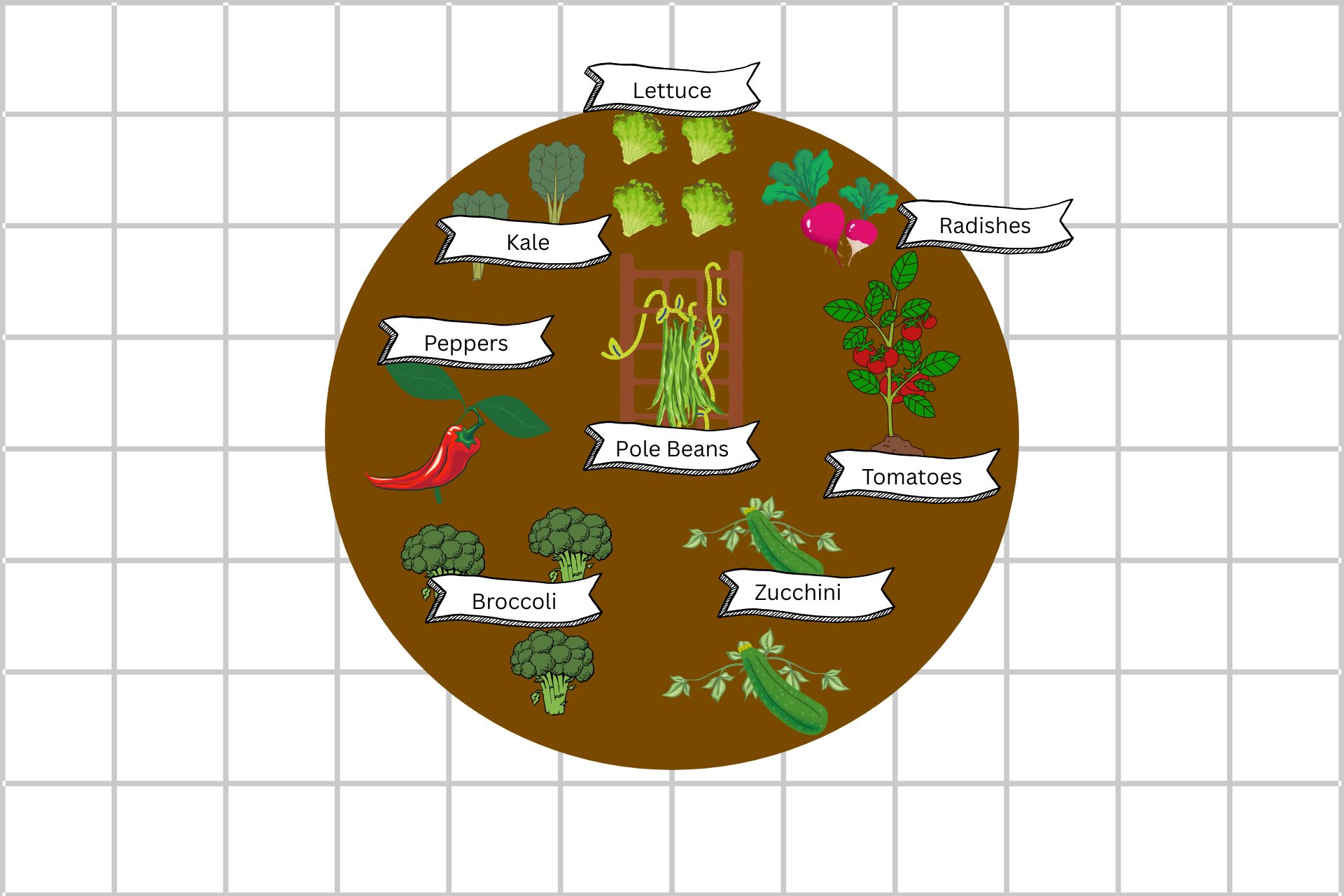
Round or oddly shaped gardens are a fun, whimsical option and can help your vegetable patch match the decorative features in a small backyard. As the summer continues, the cool-season crops in this bed like lettuce, broccoli, kale, and radishes can be harvested and replaced with heat-tolerant options like eggplant, cowpeas, sweet potatoes, oregano, or Swiss chard.
Designing Permanent Beds in a Small Garden
In small spaces, permanent beds are often a good option. They reduce compaction, improve drainage, and help you build healthy soil. They’re also easy to design and accessible. I like to leave 2 foot wide paths around the exterior of my beds so I can easily move a wheelbarrow and other tools down the pathway. I also make beds a maximum of 4 feet wide so I can reach across them for weeding, planting, and harvesting, but you can decide what works best for you.
Raised Beds Versus Traditional Beds
These days, many folks are opting for raised beds, and they have a lot of benefits. Raised beds give you good soil right from the beginning. They also drain well, warm up quickly in spring, are easy to manage, and may be more accessible for some folks.
However, raised beds have a few downsides. They dry out more quickly, especially in hot climates. They can also be costly to build and may require maintenance or replacement over time. Also, they’re tough to move, so if you decide to change your layout, it may involve quite a bit of work. There’s no one size fits all; you’ll have to decide which works best for your space.
Learn more about the Pros and Cons of Raised Beds.
The Best Crops for Small Gardens
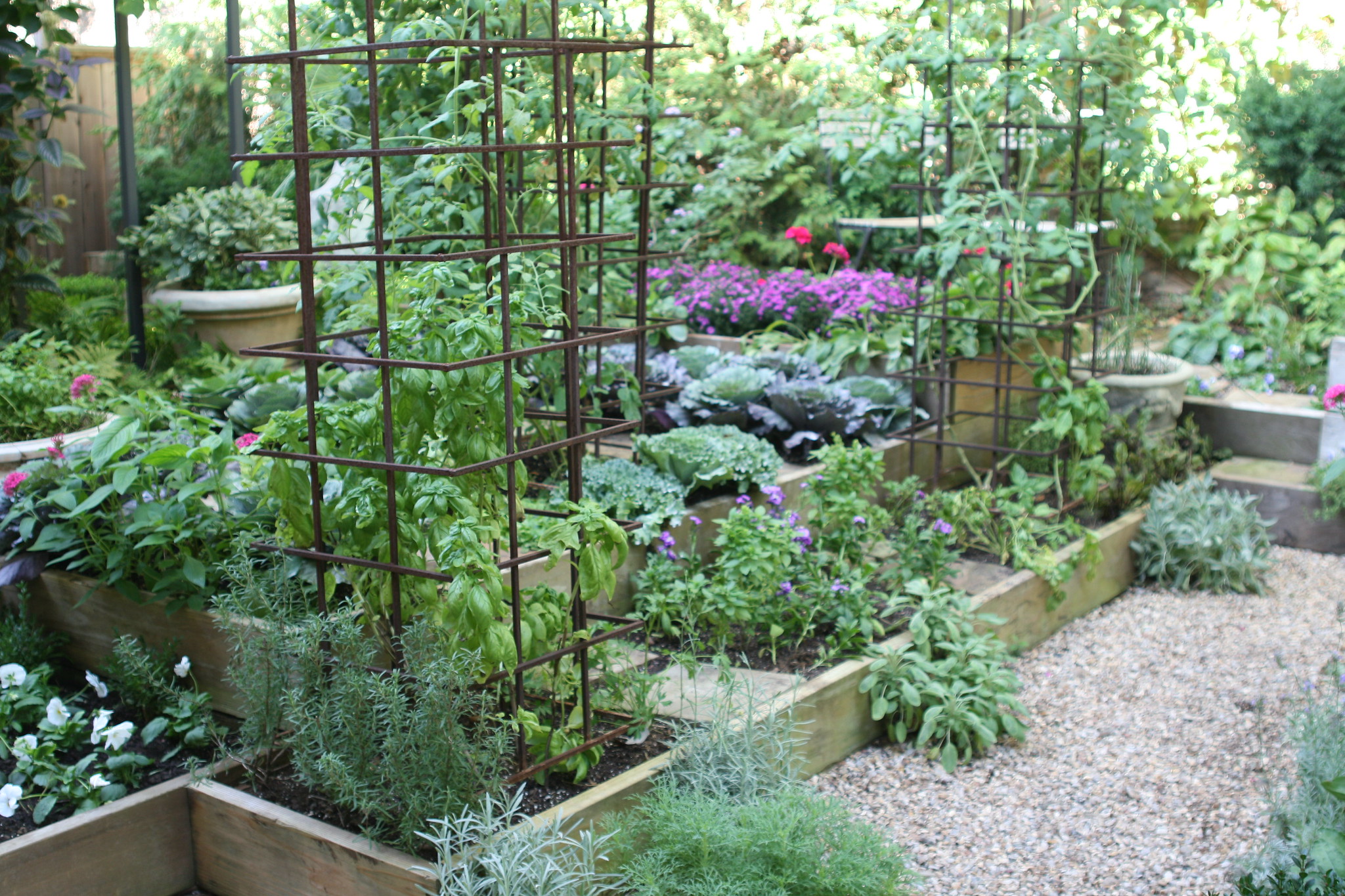
There’s no real perfect crops for small gardens. You should aim to grow what you enjoy, so that you’ll make the most of it. However, crops that are short-season and can be planted in successions like radishes, or produce over a long period, like cherry tomatoes, will help you get the most produce from your square footage. You also want to consider each crop’s growth habit. Can it be neatly trellised to save space? Does it take up tons of room for the produce you get? Can you grow it in a container?
Here are a few of our favorite varieties for small gardens, but feel free to experiment:
- Aunt Bea’s Pole Snap Bean
- Early Jersey Wakefield Cabbage
- Chantenay Red Core Carrots
- Ashworth Sweet Corn
- Marketmore 76 Cucumber
- Spacemaster Cucumber
- Arugula (Roquette)
- Champion Collards
- Vates Collards
- Premier Kale
- Salad Bowl Looseleaf Lettuce
- Red Malabar Summer Spinach
- Tom Thumb Bibb (Butterhead) Lettuce
- Wild Garden Lettuce Mix
- Deep Purple Bunching Onion
- Evergreen Hardy White Bunching Onion
- Sugar Ann Dwarf Snap Pea
- Ashe County Pimento Sweet Pepper
- Doe Hill Golden Bell Sweet Pepper
- Jalapeño Hot Pepper
- Seminole Pumpkin
- Cherry Belle Radishes
- Zipper Cream Southern Pea (Cowpea)
- Early White Bush Scallop Summer Squash
- Black Cherry Tomato
- Yellow Bell Paste Tomato
- Glacier Tomato
Sneak in Crops Wherever and Whenever Possible
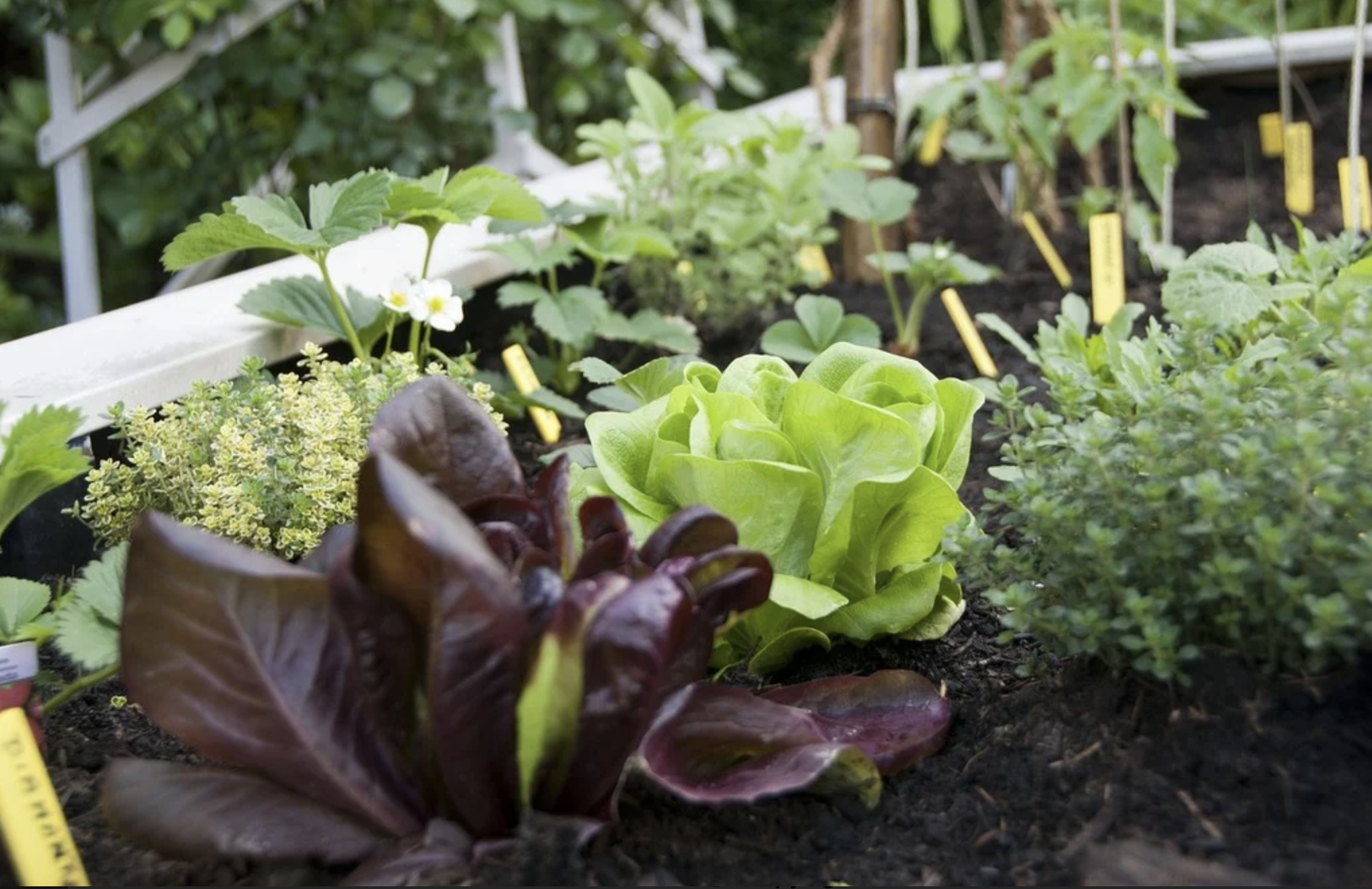
One of the key ways you can make the most of your space is to sneak in crops wherever possible. I like to tuck onions in between grids of cabbages, sow some small patches of spring radishes between squash before it gets too big, and under-sow snap peas with Malabar spinach. The onions make use of the gaps between the cabbages, the radishes are ready to pull long before the squash takes over the bed, and the heat-loving Malabar spinach takes off as the peas begin to die back.
Succession Planting
You can also add crops in by succession planting. In a small garden, you want to always be harvesting something. When lettuce bolts, pull it immediately and sow a warm season crop like green beans or zucchini. If Downey mildew takes your cucumbers, pull them and sow some pole beans. When your summer squash plants begin to fail, sow carrots or beets for a fall harvest.
The Risks of Tight Spacing
Many gardeners with little spaces forgo traditional spacing guidelines and opt for tighter spaces. For many small gardeners, this works because they can provide extra nutrients, water, and attention to make up for a bit of crowding.
However, sometimes crops need the space. Proper spacing between crops like tomatoes, summer squash, and cucumbers allows good air circulation, helping to prevent diseases like Downey mildew and late blight. Overcrowding can also lead to poor production. Some crops, like broccoli, may produce smaller heads, while beets may produce smaller roots.
Learn more about 5 Ways to Increase Your Harvest in a Small Space. This article includes advice on season extension for small gardens, growing vertically, succession planting, soil health, and record keeping.