
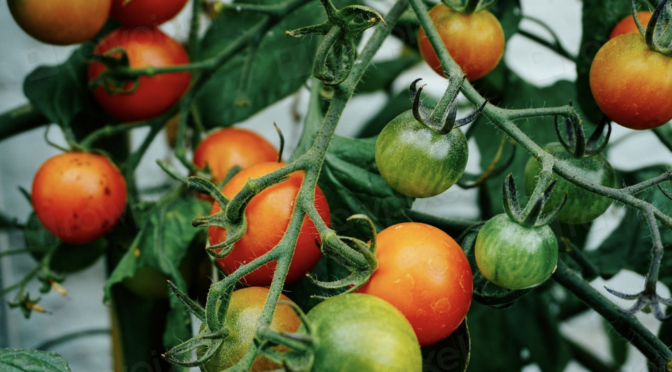
We’re seeing more and more gardeners and backyard farmers using hoop houses, high tunnels, and greenhouses for tomato production. They’re a great option for getting an extra-early harvest of tomatoes and other heat-loving crops. However, they also come with their own set of disadvantages, especially here in the hot, humid Southeast. For a great harvest of greenhouse tomatoes, consider these varieties and growing tips.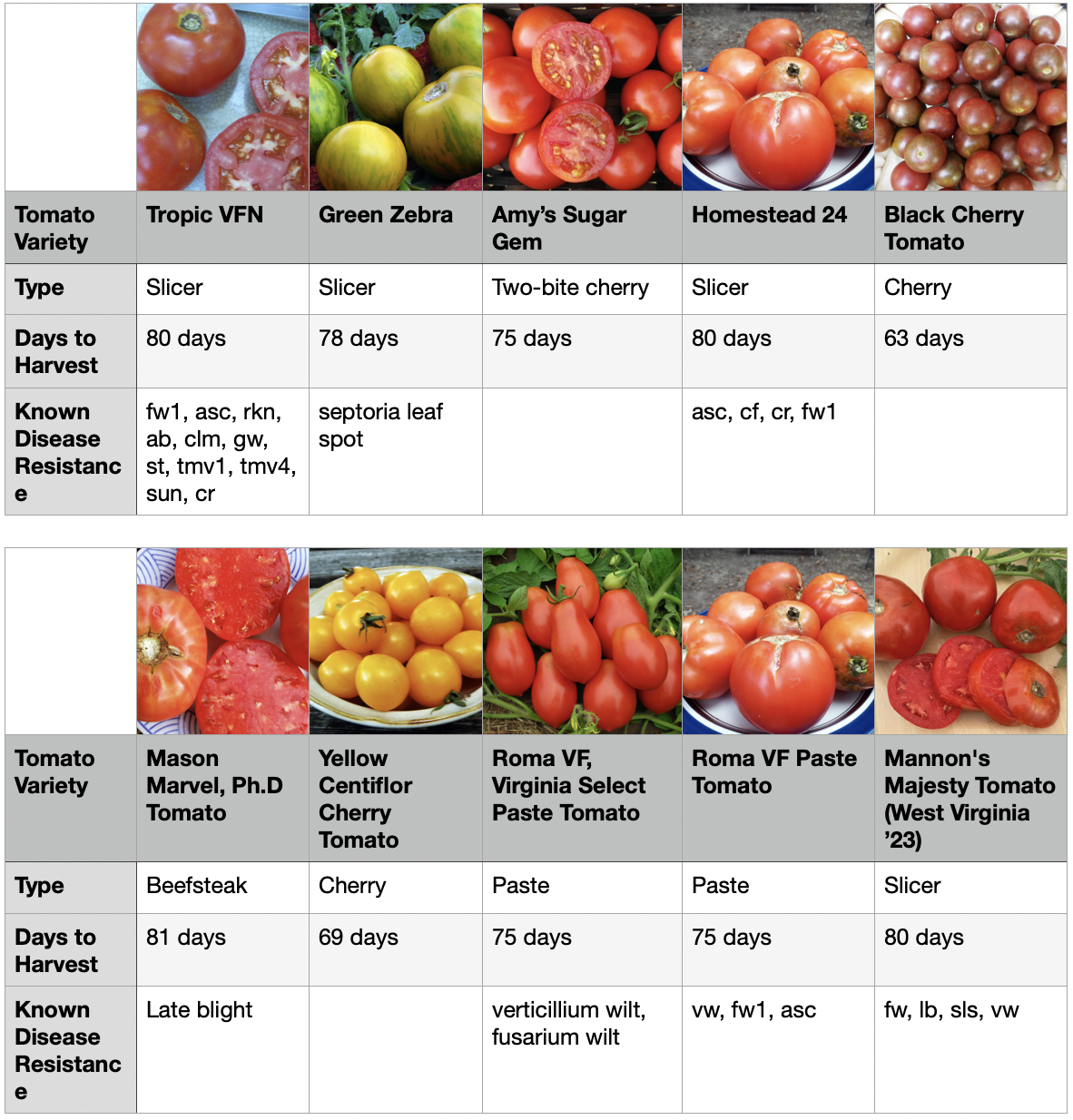
Best Varieties
You can grow any tomato in a hoop house, but some will perform better than others. An enclosed greenhouse or hoop house offers different climatic and pest conditions than out in the field. Here are some of our favorite greenhouse tomato varieties.
V, F, and N at the end of a variety name indicate known resistance to verticillium wilt, fusarium wilt, and nematodes, respectively. Check out our full Key to Tomato Disease Tolerance for other abbreviations.
Ventilate Your Greenhouse
High humidity allows fungal diseases to thrive. As the summer gets hot and humid, you need to ventilate your hoop house or greenhouse well to avoid disease. Where possible, roll up the hoop house sides. Use exhaust fans to regulate heat and humidity. Most fan options come with a thermostat that will open the shutter and turn the fan on automatically based on temperature.
Consider Growing Multiple Successions of Greenhouse Tomatoes
Many gardeners don’t consider tomatoes succession crops because healthy, indeterminate plants can produce until frost. Unfortunately, in hot, humid climates like the Southeast, tomatoes often succumb to diseases like blight before frost kills them. Even in other areas, the plant’s productivity may slow over time.
Sowing multiple successions of tomatoes can help ensure you have productive tomatoes throughout the season, whether you want them for fresh eating, the market, or canning.
Additionally, planting multiple successions allows you to grow different types of tomatoes. For example, you can plant Glacier early, followed by a succession of Atkinson. Glacier produces in just 58 days and is extra cold tolerant, while Atkinson, bred by the University of Alabama, excels in hot, humid conditions.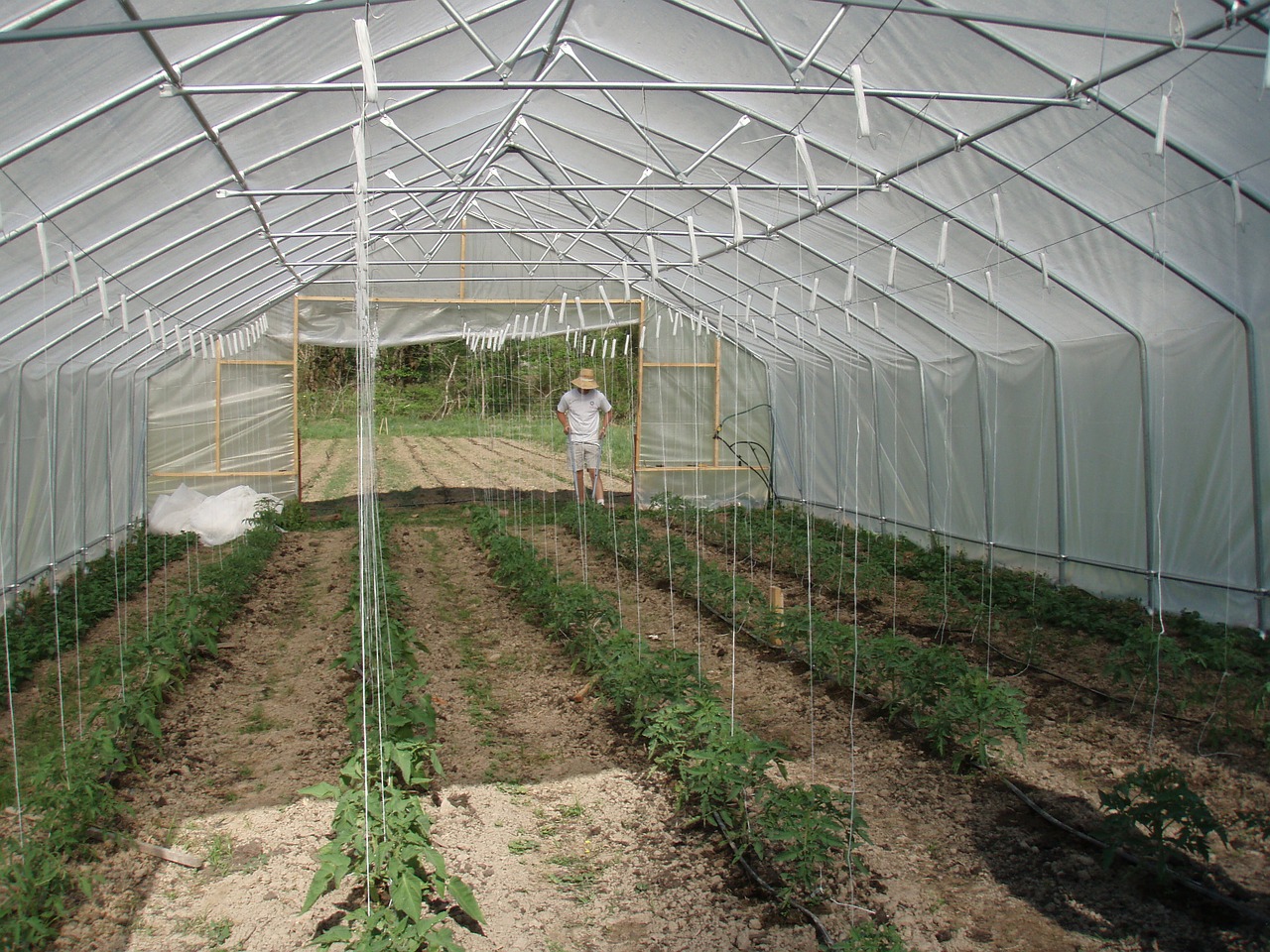
Trellis and Prune Your Greenhouse Tomatoes
Tomatoes are large, vining plants. To make the most of your greenhouse or hoop house space, trellis and train the vines vertically.
Most commercial growers use a vertical string system. Many of these systems use twine that’s suspended on a roller or pulley so that you slowly lower the twine as the plant matures, allowing the pruned bottom of the tomato vine to rest on the ground while the tip continues to grow. Growers often refer to this as the lower and lean method.
However, in smaller hoop houses or makeshift greenhouses, you can trellis plants with traditional field methods like the Florida weave, stakes, or fencing panels.
Training vines on a trellis will be much easier if you prune the tomatoes. Pruning also allows for additional air circulation, and when done correctly, can improve yields by encouraging flowering and fruit set. However, you still need plenty of foliage to maintain the plant’s growth. Check out our pruning guide for full instructions.
Irrigation
Tomatoes need consistent moisture, and hot greenhouses can dry out quickly. Water your tomatoes deeply on a regular schedule, allowing the soil to slightly dry between waterings. Consider installing drip irrigation or soaker hoses in your greenhouse to minimize your watering efforts. You can also hand-water small greenhouses and hoop houses with a hose and nozzle. Water the base of the plant and avoid splashing water onto the leaves.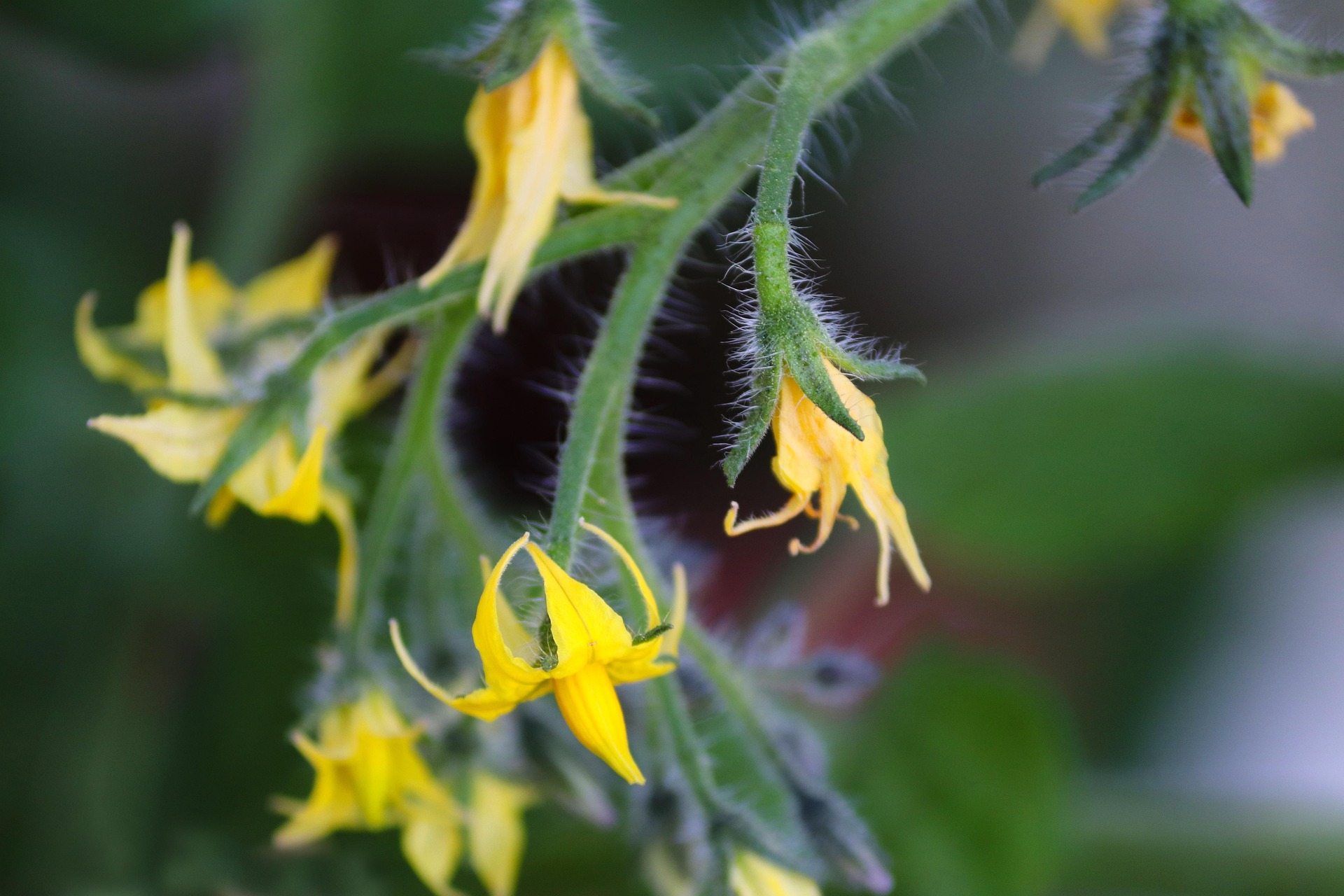
Pollination
Pollination is necessary for tomatoes to set fruit. If you have a hoop house where you can open the doors and roll up the sides, you may have no problem with pollination. However, in a closed greenhouse or hoop house system, bees and other pollinators won’t have access to your tomato flowers. If you can’t let pollinators in, you’ll need to do the work yourself by using a small paintbrush or Q-Tip to transfer pollen between flowers.